
On Examinations
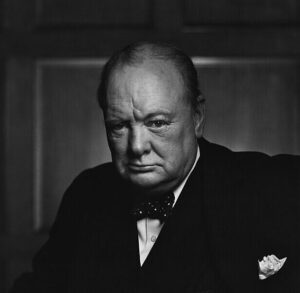
Winston Churchill
- Biography -
- Full Name: Sir Winston Leonard Spencer Churchill.
- Date of Birth: 30 November 1874.
- Place of Birth: Blenheim Palace, Oxfordshire, England.
- Profession: British politician, writer, historian, and orator.
- Famous For: Serving as the Prime Minister of the United Kingdom during World War II.
- Education: Studied at Harrow School and later at the Royal Military Academy, Sandhurst.
- Early Career: Began his career as a soldier and war correspondent before entering politics.
- Political Career:
- Served in many important government positions.
- Became Prime Minister of Britain (1940–1945 and 1951–1955).
- Leadership: Known for his powerful speeches and leadership during World War II.
- Literary Works: Wrote many books on history and politics.
- Award: Received the Nobel Prize in Literature in 1953 for his historical and biographical writings.
- Death: 24 January 1965.
- Legacy: Remembered as one of the greatest leaders and speakers in modern history.
Introduction
“At Harrow” is an excerpt from Chapter II (Harrow) of Winston Churchill’s autobiography My Early Life: A Roving Commission published in 1930. The prose “On Examination” is taken from this chapter.
In this essay, Churchill describes his school experiences at Harrow, his fear of examinations, and the difficulties he faced during the entrance test. It also describes his mischievous behaviour with friends and seniors.
Examinations are often frightening for students. Some students are very intelligent and do not worry about examinations. However, average, or weak students often feel anxious and nervous. They sometimes blame teachers, examiners, or question papers when they cannot perform well.
Churchill, when he was a young student, had similar feelings. He disliked subjects like Latin and mathematics, but he enjoyed history and poetry. Unfortunately, the examination mainly tested Latin and mathematics, which made the exam difficult for him.
Summary & Analysis
When Churchill was about twelve years old, he had to take an entrance examination to join Harrow School. He already knew that the exam would include questions from Latin and mathematics, subjects he strongly disliked. His favourite subjects such as history and poetry would not help him in the examination.
When he entered the examination hall, he felt nervous. In the Latin paper, he could not answer any of the questions. The only thing he wrote on the answer sheet was the number of the first question. He became so upset that tears rolled down his face and fell on the answer paper.
The examiners collected his paper and sent it to the headmaster, Dr. Welldon. Somehow the headmaster decided to give Churchill a pass certificate.
Churchill was admitted to Harrow School, but he was placed in the third or lowest division, which was the bottom section of the school.
According to the tradition at Harrow School, students had to walk past a master in the schoolyard and answer when their names were called during roll call. Churchill’s name appeared near the end of the list. When he came forward, the other students stared at him because his father was a famous political leader. Some students even remarked, “Why, he’s last of all.”
Despite his weak performance in the examination, Churchill later became one of the greatest leaders and writers in British history.
Message of the Essay:
The essay teaches that examinations are not always the best measure of a student’s abilities or intelligence. Every student has different talents, and education should help them develop their strengths.
Themes:
- Limitations of the examination system
- Importance of individual talents
- Value of education beyond exams
- Success through perseverance and self-belief
1 & 2 Marks Que & Ans
- Who wrote the prose “On Examination”?
Ans: Winston Churchill. - What is Churchill’s full name?
Ans: Sir Winston Leonard Spencer Churchill. - When was Winston Churchill born?
Ans: 30 November 1874. - Where was Churchill born?
Ans: Blenheim Palace, Oxfordshire, England. - Which school did Churchill try to enter?
Ans: Harrow School. - From which book is the essay taken?
Ans: My Early Life: A Roving Commission. - Which subjects did Churchill dislike?
Ans: Latin and Mathematics. - Which subjects did Churchill enjoy?
Ans: History and Poetry. - What was the name of the headmaster of Harrow School?
Ans: Dr. Welldon. - In which division was Churchill placed after admission?
Ans: The third or lowest division. - Which award did Churchill win in 1953?
Ans: Nobel Prize in Literature. - For what historical event is Churchill famous as Prime Minister?
Ans: World War II. - Why was Churchill afraid of the entrance examination?
Ans: Churchill was afraid of the examination because it included Latin and mathematics, subjects he disliked and found difficult. - What happened during Churchill’s Latin examination?
Ans: Churchill could not answer any question in the Latin paper. The only thing he wrote was the number of the first question, and he became so upset that tears fell on the answer sheet. - How did Churchill get admission to Harrow School?
Ans: Although he performed poorly in the exam, the headmaster Dr. Welldon decided to give him a pass certificate and admit him to the school. - Why did other students stare at Churchill during roll call?
Ans: Students stared at him because his father was a famous political leader, and his name appeared last on the list. - What does the essay suggest about examinations?
Ans: The essay suggests that examinations do not always measure a student’s real abilities or intelligence.
4 & 5 Marks Que & Ans
- Describe Churchill’s experience during the entrance examination at Harrow.
Ans:When Churchill was about twelve years old, he had to take an entrance examination to join Harrow School. The examination included Latin and mathematics, which he disliked. When he saw the Latin questions, he realized that he could not answer them. The only thing he wrote on the answer sheet was the number of the first question. He became very upset and tears rolled down his face onto the paper. Despite his poor performance, the headmaster decided to admit him to the school. - Why did Churchill dislike examinations?
Ans: Churchill disliked examinations because they focused on subjects he did not enjoy, such as Latin and mathematics. His favorite subjects, history and poetry, were not included in the test. As a result, he felt that the exam did not reflect his true abilities and interests. - What does Churchill’s story tell us about the examination system?
Ans: Churchill’s story shows that examinations are not always a true measure of intelligence or ability. Many students may struggle in exams even though they are talented in other areas. The education system should recognize different talents and abilities instead of judging students only by exam results. - What message does the essay “On Examination” convey?
Ans: The essay teaches that exam results do not determine a person’s future success. Churchill performed poorly in his entrance exam, yet he later became a great leader and writer. The essay encourages students to believe in themselves and develop their strengths even if they struggle in examinations. - Explain the theme of perseverance in the essay.
Ans: Winston Churchill is considered inspiring because he overcame many difficulties in his early life and education. Despite poor academic performance in some subjects, he became a great leader, writer, and Prime Minister. His life shows that determination and self-belief can lead to great success. - Why is Winston Churchill considered an inspiring personality?
Ans: The essay shows that failure in exams does not mean failure in life. Churchill struggled with certain subjects but continued to develop his talents in history, writing, and leadership. His perseverance helped him become one of the most important leaders in modern history.
10 Marks Questions
- Discuss Churchill’s experience in the Harrow entrance examination.
- Explain the message about the limitations of examinations in the essay “On Examination.”
- Discuss how Winston Churchill’s early school experiences shaped his views about education.
- “Examinations are not the true measure of intelligence.” Discuss with reference to the essay.
- Analyze the challenges faced by Churchill as a student at Harrow.
- Explain how the essay highlights the importance of individual talents and abilities.
- Discuss Winston Churchill’s life as an example of perseverance and success.
- Examine the themes of education, talent, and self-belief in “On Examination.”